
Exhibit 31 Was the Cause of the Mistrial at Adnan’s First Trial
Last night, we premiered “Exhibit 31,” the Addendum to the 12th episode of the Undisclosed Podcast. The episode’s title is based upon the key cell tower exhibit that now forms the basis for Adnan’s claim that there was a Brady violation. Exhibit 31 was also the exhibit that led to the mistrial at Adnan’s first trial. It is also further evidence of Gutierrez’s ineffective assistance.
Here is what prompted the mistrial at Adnan’s first trial:
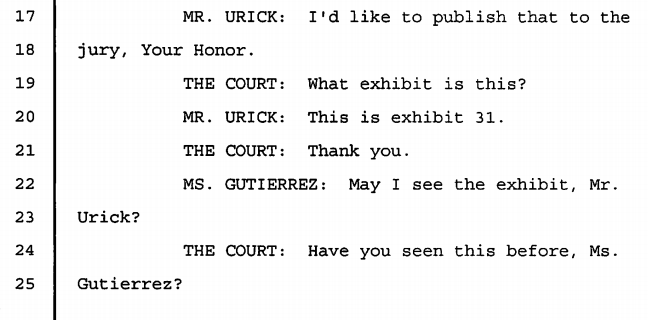
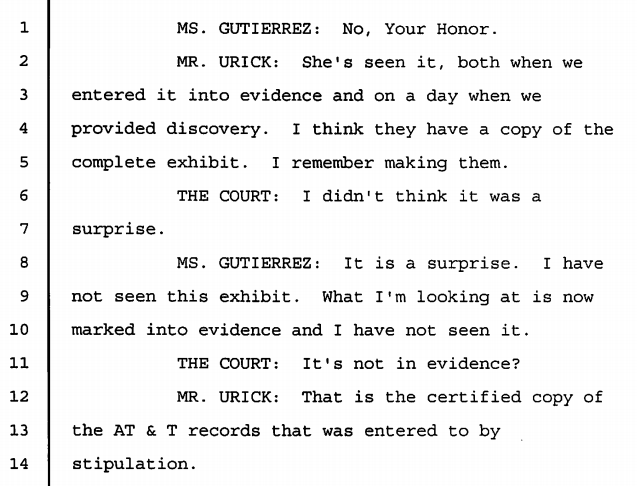
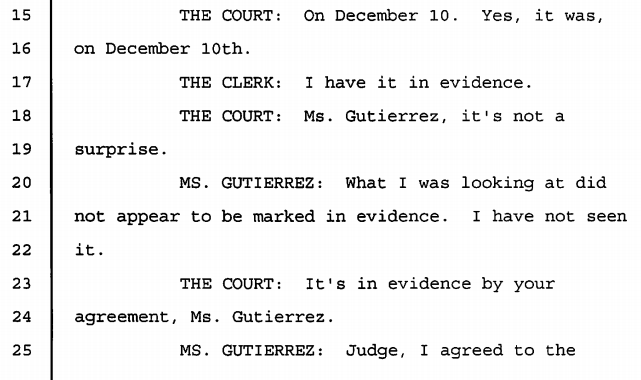
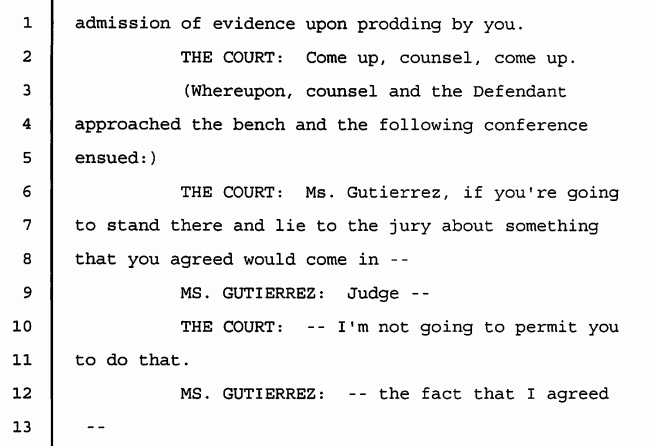
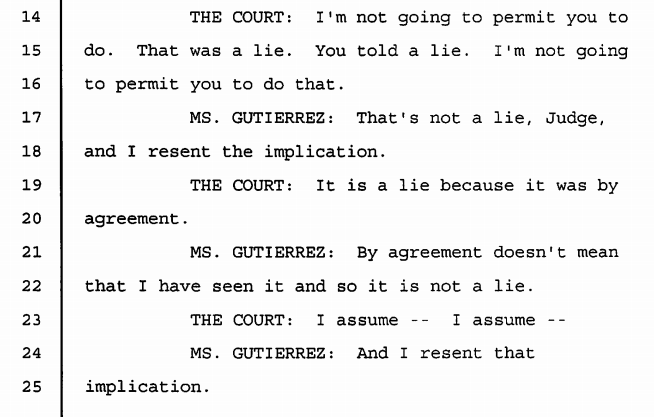
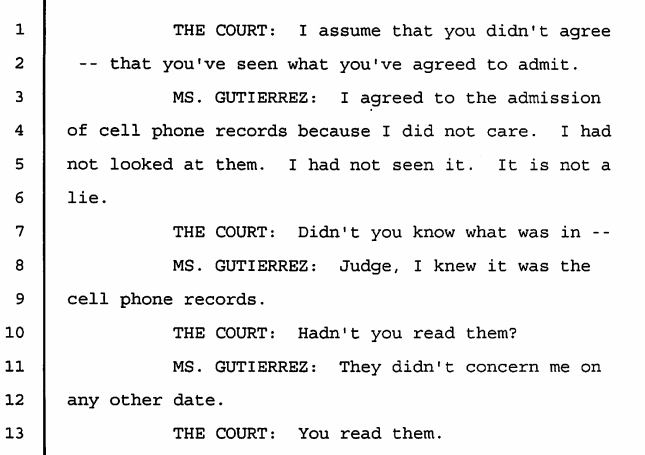
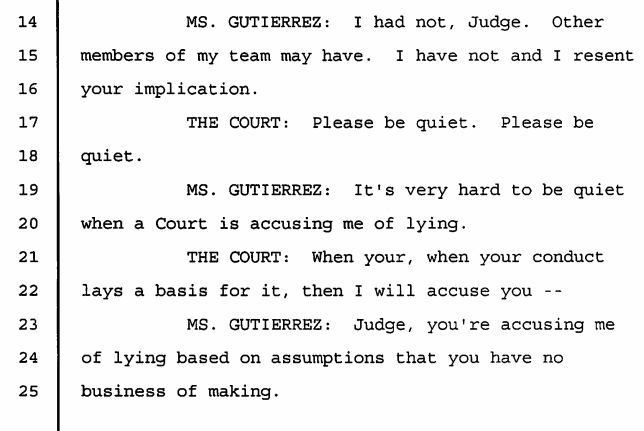
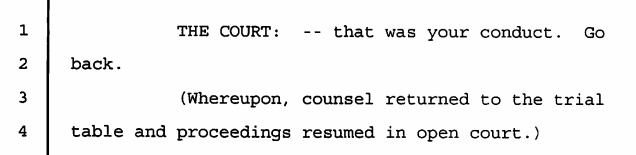
Now, one possibility is that Gutierrez was in fact lying because she had looked at Exhibit 31 before stipulating to its admission.
The other possibility is that Gutierrez was telling the truth. In this case, there is no way that her conduct is defensible. According to Gutierrez, she stipulated to the admission of what turned out to be the key piece of evidence at Adnan’s trial without even looking at it. In her own words, she didn’t care about the exhibit Then, she got involved in a semantic debate with the judge at a trial Adnan was apparently winning, prompting a second trial that led to additional legal fees and a guilty verdict.
I’ve said before that Gutierrez stipulated to the admission of more important, and debatable, evidence than any other attorney in any other case I’ve seen. If the other stipulations were anything like this one, these stipulations were not the result on reasoned decisionmaking; they were the result of laziness. Or Gutierrez was lying. It’s one or the other.
Thankfully, Gutierrez’s insouciance shouldn’t have a bearing upon Adnan’s Brady claim. Sure, it seems apparent that Gutierrez wouldn’t have done anything even if the State had been forthcoming about the nature of Exhibit 31. Under Maryland law, however, this doesn’t matter. As we noted in the Addendum, according to the Court of Appeals of Maryland in State v. Williams,
The caliber of the defense counsel’s performance in cross-examining the critical State’s witness has little, if any, bearing on materiality. We certainly are not inclined to make the test of materiality of undisclosed evidence depend on the capability or actual performance of opposing counsel in conducting cross-examination of an adverse witness. This case addresses the duty of the State, a duty that is not discharged no matter how well a defendant’s counsel handles his client’s defense and how expertly he or she endeavors to neutralize damaging evidence. “In gauging the nondisclosure in terms of due process, the focus must be on the essential fairness of the procedure and not on the astuteness of either counsel.”
-CM