
My Fourth Post on the Oral Arguments in the Adnan Syed Case: Objective vs. Subjective
This is my fourth post on Thursday’s oral arguments in the Adnan Syed case. This one covers the two points upon which the State a defense agreed: (1) there is fixed factual finding in this case that nobody from Cristina Gutierrez’s team contacted prospective alibi witness Asia McClain before trial; and (2) the test for determining whether trial counsel was ineffective under Strickland v. Washington is an OBJECTIVE test, not a SUBJECTIVE test. So, what does this distinction mean, and why is it so important to the defense?
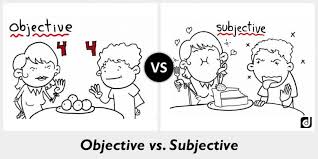
First, why is there agreement between the State and the defense that the ineffective assistance of counsel test from Strickland v. Washington is objective rather than subjective? The answer is that the case law is clear. As the Supreme Court noted in Harrington v. Richter, “Strickland, however, calls for an inquiry into the objective reasonableness of counsel’s performance, not counsel’s subjective state of mind.”
So, assume that Dana is charged with arson and Tracy, her trial counsel, interviews:
-Alice, a redheaded alibi witness who was convicted of perjury 2 years ago; and
-Erica, an arson expert with a degree from Harvard and a methodology that has been determine to be “junk science” in another case.
Tracy decided to call neither of these witnesses, and Dan is convicted. Dana later brings an ineffective assistance of counsel claim against Tracy. At the hearing on that claim, Tracy testifies that (1) she didn’t call Alice because she doesn’t trust redheads; and (2) she didn’t call Erica because Tracy got rejected when she applied to Harvard and has animosity toward anyone who hold a Harvard degree.
If courts applied a subjective test, Dana would win on her claim of ineffective assistance because her own personal reasons for failing to call Alice and Erica as witnesses are ridiculous and would easily constitute deficient performance. But, as noted, courts apply an objective test. And what this means is that Dana’s claim is going to fail. This is because we don’t care about why Tracy herself failed to call Alice and Erica as witnesses. Instead, we ask whether an objectively reasonable person would have called Alice and Erica as witnesses. And the answer would be “no” due to Alice’s perjury conviction and Erica’s “junk science.”
This ties into a point that Cate Stetson made during oral arguments: We know that the trial team didn’t contact Asia McClain, and we know the information that the trial team had about Asia and her alibi. The one thing we don’t know is the one thing that doesn’t matter: Why Gutierrez didn’t contact Asia McClain.
Of course, the reason why this doesn’t matter is that the subjective reason that Gutierrez might have had for not contacting Asia is irrelevant. All the Court of Appeals judges should be asking themselves is whether an objectively reasonable attorney in Gutierrez’s shoes would have contacted Asia given all of the information we have from the appellate record.
This is important because the State is claiming that Adnan has not proven his case of ineffective assistance because there is a “silent record” and a lack of testimony from Gutierrez explaining her thinking. But given that the Strickland test is objective, this shouldn’t matter.
-CM