
Why the Justin Wolfe Case Looks Like a Classic Case of Prosecutorial Vindictiveness
Yesterday, the United States Supreme Court “ordered a lower court to review the case of a northern Virginia drug dealer who says his guilty plea in a 2001 murder was coerced by vindictive prosecutors.” That man is Justin Wolfe, and his name might be familiar if you listened to the first season of the Serial Podcast. Here’s the transcript of Sarah Koenig talking about the Wolfe case in Episode 7 of Season 1:
I heard about this other case, of a kid named Justin Wolfe. Actually Adnan mentioned the case to me, kind of in passing. I can’t remember how he heard about it. He reads a lot of different stuff in prison. Anyway, we had been talking about the cell records, and how they were used in Adnan’s case, and Adnan said that in this other case of Justin Wolfe, cell records had also been used against him, but then Justin Wolfe’s conviction was overturned, in part because of the cell records.
So, I looked up this case of Justin Wolfe, just to see, and on paper, I have to say it’s sort of uncanny how many similarities there are with Adnan’s case. All young people, first of all. Justin Wolfe was a suburban kid, eighteen, football player. People thought of him as a good kid though he was selling pot and hanging around some tougher types. This next part is different obviously. He was convicted in the 2001 murder of a drug dealer who was shot nine times. Justin Wolfe was not the shooter. The shooter was the slightly older friend of Wolfe’s named Owen Barber who got a deal in exchange for testifying against Justin Wolfe. Owen Barber told the cops Justin Wolfe had hired him to kill the drug dealer. Wolfe was sentenced to death in Virginia. Wolfe’s trial attorney later gave up his law license, after the bar had initiated disciplinary charges against him for, and this is the technical term, being a crappy lawyer. Oh and there was a witness who was never heard from. Other than that, totally different cases.
Anyhow, eventually Owen Barber recanted. He said Justin Wolfe had nothing to do with the murder, he’d only implicated Wolfe to avoid a death sentence for himself.
Eventually, Wolfe’s conviction was thrown out for three reasons: (1) a Brady violation; (2) the prosecutor knowingly suborning perjury; and (3) the improper striking of a prospective juror (who expressed reservations about the death penalty but ultimately said he could impose it). So, what happened next?
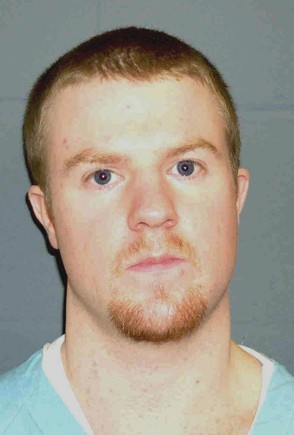
Justin Wolfe
For the full history, you can check out my prior blog post on the Wolfe case. The streamlined version is that the prosecutor again charged Justin Wolfe with capital murder. But that’s not all. When Wolfe was initially charged back in 2001,
a grand jury indicted [him] on three charges – (1) conspiracy to distribute marijuana, (2) use or display of a firearm in the commission of a felony, and (3) capital murder for hire – on the Commonwealth’s theory that Wolfe had hired his friend and fellow marijuana-dealer, Owen Barber, to kill a supplier named Daniel Petrole. Wolfe v. Commonwealth, 2018 WL 4035534 (2018).
After Wolfe successfully appealed his conviction,
in addition to the three original 2001 indictments, the prosecutor charged Wolfe with:
-Two new and additional continuing criminal enterprise charges;
-One new and additional capital murder charge contingent on the continuing criminal enterprise charges;
-One new and additional felony murder charge;
-One new and additional charge for use of a firearm in the commission of or attempt to commit a robbery; and
-One new and additional charge for use of a firearm in the commission of a murder. Id.
Rather than go to trial again,
Wolfe pleaded guilty to a charge of first-degree felony murder, use of a firearm, and a drug charge, part of an agreement with prosecutors that will allow a judge to sentence him to a range of 29 to 41 years in prison. He will get credit for the 15 years he already has served.
As part of that deal, Wolfe executed a four-page handwritten statement admitting to his role in Petrole’s murder; that statement concluded with him saying to Petrole’s parents, “I am sorry for what I did to your son.”
Subsequently, however, Wolfe claimed that his guilty plea was unconstitutional and coerced by what he called “vindictive prosecution.” Facially, he seemed to have a pretty good case.
Courts have interpreted the Supreme Court’s opinion in Blackledge v. Perry as allowing a defendant to create a rebuttable presumption of prosecutorial vindictiveness in certain circumstances. Specifically, courts have found that a defendant raises this rebuttable presumption by presenting evidence that the government increased the number or severity of the charges against him after he exercised a statutory, procedural, or constitutional right. See, e.g., Clausell v. Sherrer, 2006 WL 2846283 (D.N.J. 2006). The classic case of prosecutorial vindictiveness is a prosecutor increasing the number or severity of charges against a defendant after he has successfully appealed.
As noted, this is a rebuttable presumption, meaning that the prosecution can rebut it if it can show, for example, that it has new evidence that it didn’t have at the time of the original trial. I haven’t seen anything in the parties’s briefs indicating that the prosecution can rebut this presumption.
So, (1) why did Wolfe initially lose on bis claim of vindictive prosecution; and (2) why did the U.S. Supreme Court send his case back down yesterday?
With regard to (1),
the Virginia Court of Appeals concluded that, because Wolfe’s guilty plea was not conditional, he had waived his ability to raise his vindictive prosecution claim on appeal….The Supreme Court of Virginia summarily refused Wolfe’s petition for appeal…and denied his petition for rehearing. Wolfe v. Commonwealth, 2018 WL 4035534 (2018).
With regard to (2), the U.S. Supreme Court subsequently issued its opinion in Class v. United States. In Class, the Supreme Court
held that a defendant who pleads guilty to criminal charges is not barred from raising on appeal whether the government had the constitutional authority to prosecute the charges against him. As Class recognized, a vindictive prosecution claim falls within the category of constitutional claims that concern the government’s power to prosecute. Id.
So, by sending Wolfe’s case back down, the U.S. Supreme Court is saying that Wolfe’s vindictive prosecution claim is justiciable, and, for the reasons I noted above, I think he has a pretty good chance of winning that claim.
-CM