
Governor Jerry Brown Orders Additional DNA Testing in the Case of Kevin Cooper, Who Was Once 8 Hours Away From Execution
On Monday, California Governor Jerry Brown “issued 143 pardons and 131 commutations as part of his traditional Christmas Eve act of clemency.” That’s a pretty decent haul. By way of contrast, New York Governor Andrew Cuomo has not yet commuted a single sentence in 2018. In addition, Governor Brown
ordered new tests of physical evidence in the case of Kevin Cooper, whose high-profile quadruple-murder conviction three decades ago has come into question in recent years.
Brown said in a statement that he was directing “limited retesting of certain physical evidence in the case and appointing a retired judge as a special master to oversee this testing, its scope and protocols.”
To understand the significance of the Kevin Cooper case, let’s look back at my prior posts on his case and see what’s happened since I posted them.
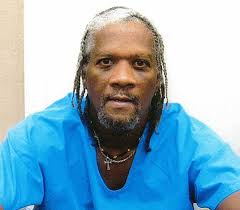
I did three blog posts about the Kevin Cooper case back in 2016:
The EDTA Case That May be Even Crazier Than the Steven Avery/”Making a Murderer” Case
More About the EDTA Case That’s Crazier Than the Steven Avery/”Making a Murderer” Case
The Inter-American Commission on Human Rights & EDTA Misconduct in the Kevin Cooper Case
As you can tell from two of the titles, there is a link between the Kevin Cooper case and the Steven Avery case, and it’s that both claim that their blood was planted at their respective crime scenes.
Specifically, in Cooper v. Brown, 510 F.3d 870 (9th Cir. 2007),
[Kevin] Cooper was convicted of the first-degree murders of Franklyn Douglas Ryen, Peggy Ryen, his wife, Jessica Ryen, their 10–year old daughter, and Christopher Hughes, an 11–year old neighborhood friend of Joshua Ryen, the Ryen’s 8–year old son who was brutally assaulted but lived. Following his conviction, Cooper was sentenced to death.*
Soon after the murders,
a bloody tan t-shirt [was] found beside the road leading away from the house where the murders took place….Initial testing of stains on the t-shirt showed that they contained blood consistent with one of the victims and not consistent with Cooper. Cooper presented evidence of the t-shirt as part of his defense at trial….
Subsequently,
Long after trial, at Cooper’s insistence, the State performed a DNA test on some of the blood on the t-shirt. Cooper maintained that the test would prove his innocence. Instead, the blood tested positive for Cooper’s DNA. Cooper maintained (and continues to maintain) that his blood was planted on the t-shirt. If the blood was planted, the only possible source was blood taken from Cooper by law enforcement authorities. A vial of blood was taken from Cooper by San Bernardino County Sheriff’s Department (SBCSD) personnel on August 1, 1983, two days after his arrest. That blood contained an added preservative called EDTA.
At this point, Cooper’s federal habeas petition had already been denied, but the Ninth Circuit granted Cooper’s successor petition, which sought, inter alia, remand to the district court for “testing of the T-shirt for ethylene-diamine tetra-acedic acid (“EDTA”) blood preservative.” According to Cooper, if there were EDTA in the blood on the t-shirt, it would prove that the police planted the evidence and that all of the evidence in the case was unreliable.
Why? Well, “[p]urple-stoppered blood collection tubes use ethylenediaminetetraacetic acid (EDTA) as the anticoagulant agent.” Therefore, the theory is that elevated EDTA levels in blood establishes that it came from a collection tube, i.e., that it was planted. So, testing was done in the Kevin Coper case and…it was a mess. While one doctor found that “the EDTA level in the stain with blood was actually lower than that of most of the control areas,” another doctor found elevated EDTA levels in the stain but then “withdrew his results after discovering EDTA contamination in his laboratory.”
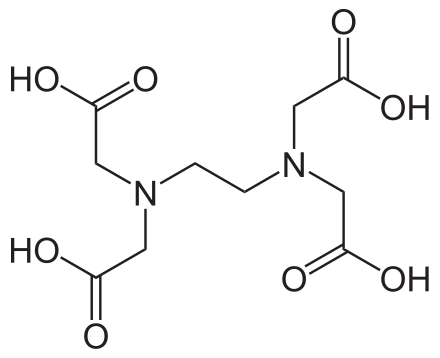
EDTA
Cooper’s conviction was eventually affirmed, but there was a dissenting opinion by five judges on the Ninth Circuit, who held, inter alia, that
As will be described in greater detail below, the district court impeded and obstructed Cooper’s attorneys at every turn as they sought to develop the record. The court imposed unreasonable conditions on the testing the en banc court directed; refused discovery that should have been available as a matter of course; limited testimony that should not have been limited; and found facts unreasonably, based on a truncated and distorted record.
The most egregious, but by no means the only, example is the testing of Cooper’s blood on the t-shirt for the presence of EDTA. As will be described in greater detail below, the district court so interfered with the design of the testing protocol that one of Cooper’s scientific experts refused to participate in the testing. The district court allowed the state-designated representative to help choose the samples to be tested from the t-shirt. The court refused to allow Cooper’s scientific experts to participate in the choice of samples. Indeed, the court refused to allow Cooper’s experts even to see the t-shirt. The state-designated lab obtained a test result showing an extremely high level of EDTA in the sample that was supposed to contain Cooper’s blood. If that test result was valid, it showed that Cooper’s blood had been planted on the t-shirt, just as Cooper has maintained.
A careful analysis of the evidence before the district court strongly suggests that the result obtained by the state-designated lab was valid. However, the court allowed the state-designated lab to withdraw the test result on the ground of claimed contamination in the lab. The court refused to allow any inquiry into the alleged contamination. The court refused to allow Cooper’s experts to review the bench notes of the state-designated lab. The court then refused to allow further testing of the t-shirt, even though such testing was feasible.
Cooper’s case was subsequently heard by the Inter-American Commission on Human Rights (IACHR), which held that
Analyzing this issue in its context, the Commission observes that the objective of ordering the EDTA test was precisely to provide clarification as to whether evidence against Mr. Cooper had been planted or manipulated. The way the process was managed by the courts did not provide that clarification. Serious issues remain with respect to the conditions under which the testing was done and the withdrawal of the results that would have been favorable to Mr. Cooper by the state-appointed lab with no possibility for the defense to probe or challenge the reasons or validity of the withdrawal. The district court and 9th Circuit accepted the failure to clarify this evidence without allowing or requiring steps that would have been available–including but not limited to retesting the shirt or authorizing the defense to have access to lab data, notes, reports and other materials relative to the claims of contamination by the state-appointed lab–to ensure a complete review as to whether there may have been evidence tampering by state officials.

The IACHR’s report was in October 2015 and was not binding on United States courts. Subsequently, I did my three blog posts in January 2016. Subsequently, at least three major things happened:
-Cooper filed a petition for executive clemency with Governor Brown in February 2016
-On February 14, 2018, Law School Deans Erwin Chemerinsky (Berkeley); Michael Waterstone (Loyola Los Angeles); Lisa Kloppenberg (Santa Clara); and John Trasvina (San Francisco) sent a letter to Governor Brown urging him to act affirmatively on Cooper’s clemency petition; and
-On May 17, 2018, Nicholas Kristof wrote a compelling piece for the New York Times laying out the case that Cooper was framed.
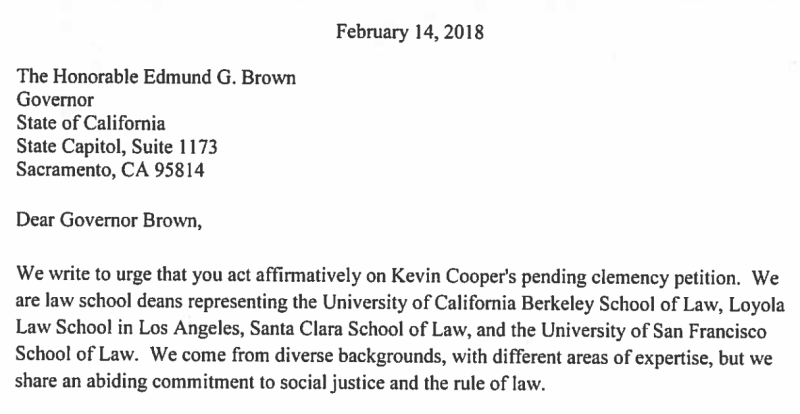
The beginning of the letter from the Law School Deans.
So, what happens now? It’s unclear from Governor Brown’s order exactly what evidence will be tested, but, if I had to guess it will be the evidence identified by the dissenting judges of the Ninth Circuit, which I detailed in this post. Why? It’s what the defense asked for in their clemency petition for Cooper:
As Judge Fletcher and other Ninth Circuit judges and the IACHR explained, forensic testing the Ninth Circuit ordered in 2004 has never been adequately completed. And further testing can also be done on evidence that is in the control of the State to exonerate Mr. Cooper and identify the actual attackers. Mr. Cooper has requested such testing, but the State, which has custody of the evidence, has refused further testing and opposed it in court.
Simply put, this is a huge development in a case in which Cooper was once just eight hours away from execution. As the case progresses, I will continue to report on it on this blog.
-CM